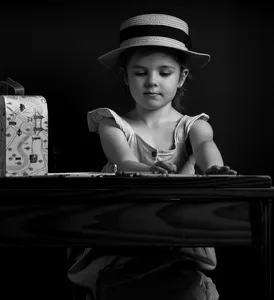
Jonathan Wolstenholme “The Collector” 2005
I’ve used Jonathan Wolstenholme’s painting to portray a focus on detail. The collector uses detail to identify his butterfly, the artist attends to detail in creating a new perception or meaning, and the writer can produce a whole array of significance and emotion through adding tiny touches of detail. It was while watching the DVD of Room on the Broom with little people that this post suggested itself. In the delightful children’s book, a dog, a cat, a bird, a frog in turn ask for a place on the witch’s broom in return for finding her lost items. But the DVD adds a layer to the original. After the cat is installed, it suffers a jealous moment and wants to persuade the witch against taking on any more passengers. All this is conveyed silently, purely by a raised eyebrow or a turned-down mouth, the invention of the animator. The book was satisfying enough to the child, one good turn deserves another, but with the added detail of the cat’s facial expressions, the child is reminded of his own difficulty in sharing or being joined by a newer traveller in his life. An added layer is given to the story. Noting the animator’s effective additions, reminded me of the delight in ‘reading’ the graphic book by Shaun Tan, The Arrival. This is a flowing wordless narrative about emigration. Categorised as a children’s book, it would do well on every adult’s bookshelf. In my view it is as much a classic as Coelho’s The Alchemist. The Arrival is chockful of meaningful detail. Just one example: leaving his country, the emigrant must say goodbye to his loved ones. Tan portrays this not just bya picture of a loving hug, but a close-up of the hands clasped, then loosened, then the fingers leaving those of the others, a tremendously evocative set of images. This is just that detail that resonates with the reader. Another graphic artist might have left it to the hug or the sad face.

UX Myths from user-experience designer Zoltán Gócza
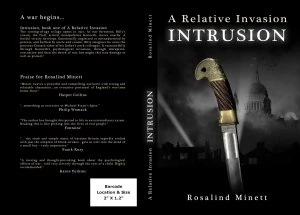
In textual works it is also the small detail that can hit the heart-strings. I’ve tried to do this in Book 1 (Intrusion) of A Relative Invasion. For example, seven-year-old Billy is on the station platform, other children crowded around him, but he doesn’t have a parent present. While the others are hugged and last goodbyes exchanged, the oncoming train causes a small waft of wind that lifts Billy’s name tag against his face, and lets it fall again. Kate Atkinson’s heroine in One Good Turn breaks an established routine of breakfast by eating the remains of a packet of chocolate digestives with her coffee, and on the peach sofa in the living room. This little detail lends a delightful visual, but its significance lies in the implied rebellion against her absent husband. In An Equal Music, Vikram Seth shows us how distressed his protagonist, Michael, is about his musician friend, Carl, although Michael is avoiding talk of him. Michael touches the red mark on the left side of his chin, the violinist’s callus. The image of Carl’s bow sweeping up and down comes immediately to his mind. I’ve been arbitrary in my choice of examples. However, if you pick a novel up and opened it randomly an d find no such detail, perhaps it will be a disappointing read. Crises and tensions in the plot do make us want to read on, but I believe it’s these little details that give a feeling of satisfaction during and after the read. This doesn’t seem to happen with a book that is wholly plot driven. It’s like the difference between eating a large pizza or a meat and two veg meal. We may feel full initially but we need a decent dollop of protein. The sense of satisfaction lasts so much longer.
(Intrusion comes out in paperback later in February 2015, a fuller version than the Kindle.)