Strengthening your writing via stimuli.

roseSmell_opt

Writing stimuli. What gave you that sudden idea that made you urgently scribble it down? It’s worth exploring.

The power of olfactory stimuli in activating memory is well known. But it’s much harder to ‘dream up’ a smell that might affect the character in your story, than it is a sound or sight.

When we’re stuck for ideas for a visual stimulus,  Art can provide perspectives, narratives, symbols to enrich our writing.  For auditory stimuli, theatre and radio present us with ideas and emotions through sound patterns, speech or music.  snuff_optThere is no equivalent for smells.

So having found the right sound or sight stimuli to cause your hero to pale with emotion how to find the right smell/scent/perfume/stink to cause emotional impact? Leave aside the obvious triggers: magnolia, blood, excrement, cabbage (who wants to write hackneyed stuff?). Will the character stop short as spinach fumes enter his/her nostrils, or candy floss?  What particular scent might have been recorded in his/her long term memory?
skunk_opt

You can prepare for that blank moment. How about noting down your own strong reactions to any smell, pleasant or unpleasant? List the source for each. This will make you rack your brains, and may well summon up incidents that you can use in your story. Add any smells that you already know act as powerful reminders for you – and write down why.

A scent for one person may be a stink for another. One perfume might raise very different memories for two different characters. Identifying that memory can enrich your story line. For instance, the whiff of musty clothes in a charity shop reminds Kara of a great aunt, but Debra of pass-me-downs when she was young.  The scent of aloe vera takes Anna back to the birth of her baby, but reminds Dan of a little lane in Almeria where he was set on by teenage thugs. They find themselves quarrelling . . .
TapirAtSDZ

With such a list of smells, you can google them to add any interesting facts to their source and the memories they evoke for you.  Strengthen your writing with that detail that enthralls readers and brings them right into your story.
Continue Reading

Title Optional

Struggling to find the right title?

A writer recently remarked that she had difficulty in thinking of titles. I thought I’d concoct a list for beginner writers allowing use for different genres. Let me know if you like this kind of post. It can be taken seriously or not. Who knows, one of these may spark the next novel for someone. These titles are intended for you to make your own associations (and stories). I had fun.


One day too long

Caught in Time

Idyll in Back Alley

Plenary Session

Forbidden Journey

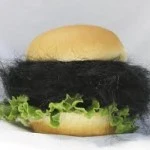
Is There Hair on my Burger?  (or their hair – works as well)

fur burger

An Intricate Endeavour

It Takes Time to Jam

Black is the New Grey

They never called me Edna

Not Everyone Marries in a Cathedral

Blogging To Bliss

Entropy


IF YOU LIKE THIS, I CAN DO MORE. (But I should be finishing my next chapter).

Continue Reading

9 points on writing edgy stories

IMG_1622

My second post on writing edgy short stories.

Here are some suggestions. (My previous post will add meaning to this.)

1. Write with a clear voice. Not yours, your character’s. It doesn’t have to be first person. You can write third person from the main character’s (MC) point of view. What matters is that point of view, the reader feeling sure s/he is standing in the MC’s shoes.

2.  The reader doesn’t have to like the MC. It is edgier if a sneaky liking for a character makes the reader uneasy or worse. (What sort of person must I be if I feel sympathy for this baddie I’m reading about?)

3. Short stories can’t cope with having too many characters. The edginess may depend on being in the MC’s head most of the read, so the reader has to be drawn to him/her in some way – even horror or outrage can achieve this.

images-2


4. Dialogue has to do its job well and pithily. Every word counts; every unnecessary word detracts. A character merely saying ‘Whatever‘ can give a total feel of his/her reaction, whereas a whole sentence may not.

5.  Structure. If you are working on : 1/5 start, 3/5 middle. 1/5 end, that final fifth must hit home. Either shock the reader by reversing all his/her expectations or let your MC cross over some unacceptable line. It may ‘only’ mean stealing a child’s bike and pretending innocence. However, the ‘journey’ must be there, and it’s vital that whatever happened is some kind of shock to the system.

6.  Edginess doesn’t necessarily require extreme sexual or aggressive behaviour. Risk of some form is usually involved but an action close to home can cause the uneasiest feelings, or an everyday event suddenly appearing to have a different significance.

7.  The edgy story does not have to be crime or erotica. It can suggest something subtly sinister. It can be socially provocative. It can be funny.  It’s no longer edgy for sexual abuse to be involved, not because it’s any more acceptable, but because it’s now hackneyed as a character device.

8.   It is still edgy to nudge into those actions that would be too awkward to admit to a friend. e.g. a friendship established in the first 4/5th of the tale where we worry that this friend is about to cheat or betray. The last fifth reveals that we are wrong. The kickback is that the assumptions we made highlight our own prejudices.  Edginess must produce unease.

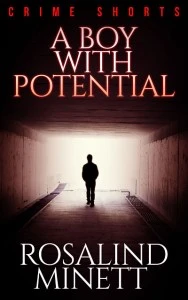
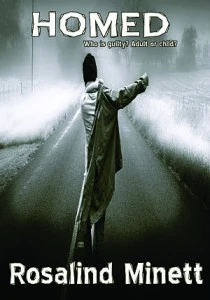
I hope I’ve achieved this in the first two of my Crime Shorts, A Boy with Potential and Homed. Do let me know if I have.

A_Boy_with_Potential_3_opt-2 Homed_book_cover_opt


Continue Reading

Writing edgy short stories (1)

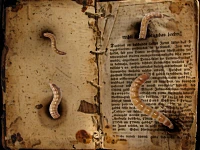
Book_Worms_by_Wallwatcher_opt.pngYour style will never be suited to women’s magazines?

Is it that your story doesn’t have that happy an ending, or it isn’t uplifting?  Perhaps it isn’t quite PC. Maybe the apparent message isn’t truly what you mean AND you don’t want the reader to believe it’s what you mean. You may have your tongue in your cheek. You may have a cheek. Or you may have an unreliable narrator. The thing is, you want to write the story and you want it read. Going against the grain means taking a risk. Risks are edgy.

It’s a shame that ‘edgy’ can now refer to a hairstyle with long straight bits covering one eye, or the inclusion of full sex in YA. In fact it’s an adjective referring to a feeling of unease, a risk-taking. This could be social, intellectual, artistic.

Let me suggest alternative imaginings of ‘edginess’ to those of hairstyles or urban sex.  Here are some images that may prompt a writing response in you: I’m deliberately not putting my own spin on them.

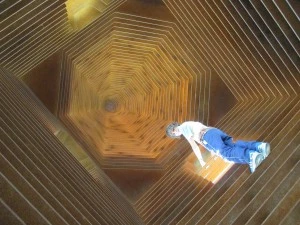
STACKED EDGES:

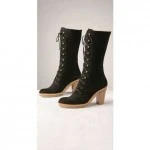
2012-03-25 01.03.39                  roofedges          bootswEdges


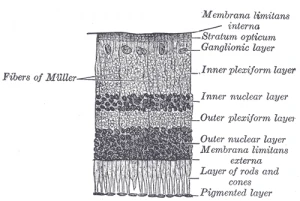
Or even more abstract: LAYERS OF MEANING

image


analysis of layers                 excavationlayer


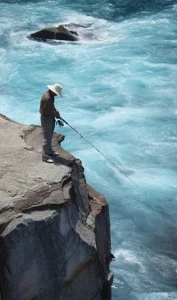
The following one, though, is more obvious. Suppose it was sent as a greetings card? Wouldn’t you have a sense of unease about the sender. The inevitable Will he fall? reaction does not sit well with any good wishes expressed on the card.

coastal fishing

Finally, an anecdote. I don’t know the artist’s intention, but a portrait in the National Portrait Gallery’s exhibition a few years ago left me with a memorable feeling of distinct unease. It showed a beautifully dressed child of about eight years with an expression suited to a disenchanted thirty-year-old. No descriptions or explanations under these portraits, the artist may invite you to make up your own story . . .

Continue Reading

Writing: how to improve your focus

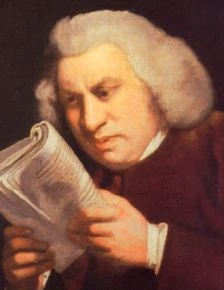
SamuelJohnson
Samuel Johnson in close focus

It’s commonly mentioned by writers as a problem: keeping focus on the book you’re currently writing. It isn’t just the intrusion of other writing or everyday chores. More than ever, writers blame the ingress of social media caused by two pressures: firstly the attraction of seeing friends’ and family’s daily activities, with consequent need to like, comment, or even worse, engage in a to and fro dialogue; secondly, the constant emphasis on the importance of social media for marketing the books we write.

There is only one way round this problem. Limitation. In the same way that we curtail, if not curb, our pleasure in food and drink in order to escape obesity, we can avoid gluttonous social media activity.

Easiest to restrict family/friends to a time of day assigned to relaxation. Just best not to open those Facebook etc at other times. There’ll always be something to divert you. For marketing, wisest to schedule a set day and time for such work and avoid it at all other times.

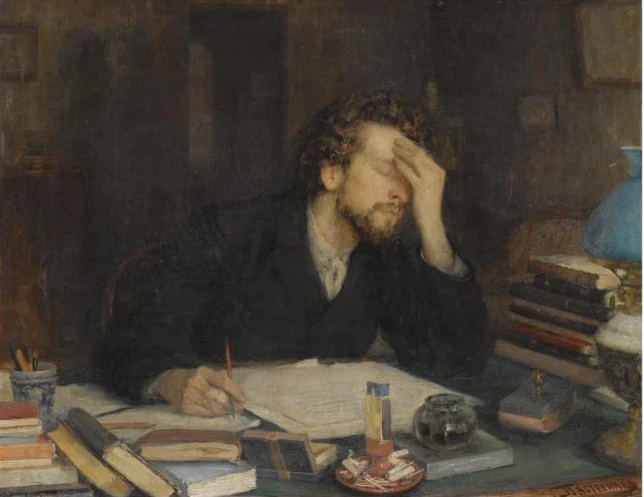
Leonid_Pasternak_001

I wonder if Pasternak was having trouble focussing in this picture, or was tormented in sympathy with his characters?

Keeping focus on the book in process does not mean never doing anything else until it’s finished, however. You can take off for a break somewhere entirely different and yet keep your focus on your characters. Keep them and their problems in mind and relate what you hear and see to their situation.

For instance, working on my WWII trilogy, A Relative Invasion, I realised that my protagonist, Billy, had not been punished by his adversary, cousin Kenneth, for a well-meaning interference. Manipulative Kenneth would surely not let Billy get away scot free.  Taking time away from the computer, I set off to wander round an arboretum and get some fresh air (and fresh ideas). On the way, I listened to a radio programme about printing and book binding. The word ‘pigskin’ made me sit up. Of course! The pigs Billy loved and fed daily had been taken to the abattoir to Billy’s great distress. Kenneth could punish by giving Billy a pigskin wallet for Christmas.

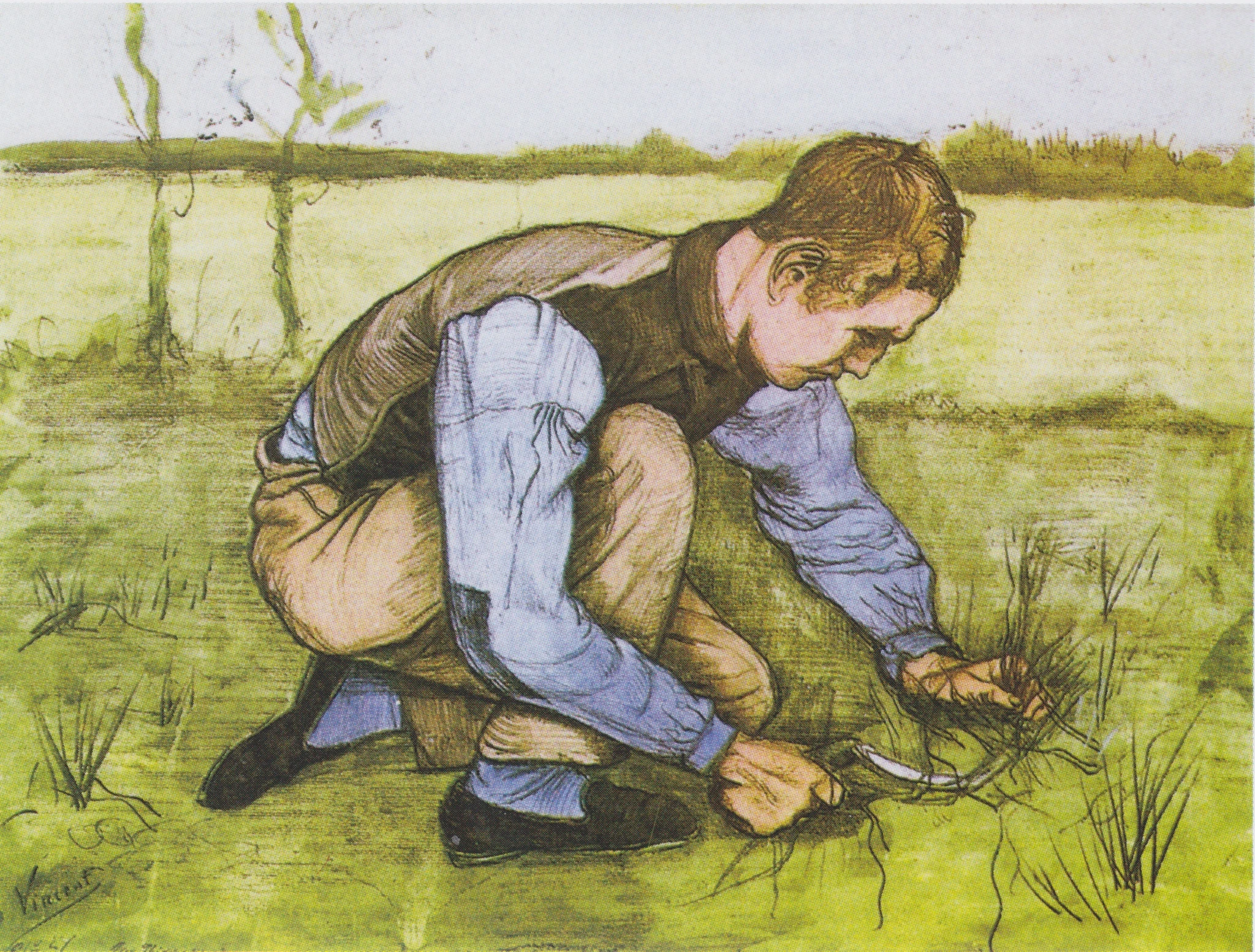
Van_Gogh_-_Kauernder_Junge_mit_Sichel
Van Gogh

The arboretum itself made me realise that I hadn’t included much description of the boys’ surroundings beyond the initial one. How would they react to the countryside when evacuated away from the blackened buildings of London?

I listened to an interchange between some children nearby. The running and quarrelling suddenly stopped when one of them saw a squirrel burying nuts. It was vigorously stamping its feet, or that’s how it seemed to the younger child. She turned to her mother, ‘It’s having a tantrum!’  The other child laughed. A lovely moment, and one I could work at for hostility between my two boy characters.

There were other ideas, too, that came from this outing. These could be called ‘writing refreshments.’

I could have taken a break and thought of other things, but keeping my focus on my book didn’t stop me benefiting from this time away from the computer. In fact, I wrote more rapidly once I got home, all the new ideas fresh in my mind. As is often the way, one new idea helped others so that the narrative moved along.

Have any of you gained unexpected ideas through taking a break away from your desk?

Continue Reading

Scottish Showcase: Review of The Grind

Today’s post is a review I wrote for ShortStops, a literary online site that celebrates the short story.

The Grind is an online journal showcasing creative work from across Scotland had its first issue recently. I thoroughly enjoyed reading this as can be seen from the following:

THE GRIND – A NEW CREATIVE JOURNAL

Scotlandflag

It was enlivening to read the first issue of , an online magazine showcasing short fiction and visual art from across Scotland. The Grind will give new artists and writers the opportunity to have their work seen by an interested audience. Always ahead in the field of Education, Scotland has its own voice and personality, perhaps insufficiently seen internationally.

Some of the contributors will be completely unknown, others have already won acclaim for their work. I enjoyed all the contributions but can only mention a few in a brief review.

The first issue is certainly as diverse as the parts of that country. Dramatic treescapes from Jamie McFarlane open the magazine. This is followed by some poetic gems. I particularly liked Dreamscape by Seonaid Francis, short but lyrical, and delicately to the point.

The tone is very different for the arresting architectural and life-style statements by Declan Malone. These photographs both appealed to the eye while depressing the spirit, and as spatial configurations, they somehow sum up a visual experience for a significant proportion of the population.

Also memorable, are the very disturbing psychological portraits by Bryan M Ferguson. Somewhat filmically, he portrays what is happening and has happened to his subjects whom he allows to speak for themselves. His use of black/white contrast add to the effect upon us.

There is flash fiction in this issue, as well as poetry. I would pick out the haunting set of mini ghost stories by David Flood. These are less fantasy than a representation of the living loss for the ordinary person of those departed. The short pieces held together well as a set.

In the same vein, I loved the haunting shadowy photographs of TV Eye, like flickers of memory. Some photographs please as a work of art, some as technique. These appeared to strike some new ground, touching on half formed thoughts or minimally perceived movements.

In strong contrast, the impressive and central work NMDA by CD Shade is an intellectual presentation. It uses text, rhythm and diagram to present a visual representation of the glutamate receptor and its functions. This work really needed larger pages for readers to appreciate the scientific, cognitive, language and life implications it draws attention to. I enlarged each section in order to read it properly. NMDA is in essence a scientific poem, unique in its style. I am sure it will receive the attention it deserves .

grindLogo

This is a stimulating and exciting magazine. I did wonder if a different title would benefit it; a hydrophonics magazine has been using it for some time. Otherwise, only one criticism – the layout sometimes made it difficult to determine whose work I was seeing, so that I had to return to the Contents page. The author’s name, often written very small, hovered between pages. One artist framed his work, and this made for much easier viewing, especially on a tablet.

The talented writers and artists present a range of themes and genres in this first issue of The Grind. If there are to be changes in the later issues, I hope there will be a chosen theme each time. It will be exciting to see how the different individuals respond to this within their own medium and style.

I shall be looking out for Issue 2.

First published on www.ShortStops

Continue Reading

Starting a Novel – 10 points


Leonid_Pasternak_001


Are you starting to write a novel? Yes, it’s hard. Really, it’s best just to press on with it rather than tell people about it. There will be time for that when you’re finished.

Here are 10 points to consider. You can waste so much time in the early stages of starting a novel when you should be just getting that important first draft down. Before listing these, one thing that will help you above all others, is to buy Scrivener. At around £45.00 it’s the best purchase I’ve ever made and if I’d had it years ago, I would have had a longer life and lived more of it! It organizes all your writing and avoids all those hours searching for previous drafts, short notes you’d made on a character or setting and so on. It will considerably help your structure. You can even trial it free.

Let’s say you’re well past the ‘thinking about writing a novel.’ You have the germ of the plot and have written enough to imagine the finished work in your hand. Download the trial of Scrivener and start building your chapters, or scenes within the chapters. (iTunes has how-to videos).

Now consider these ten points.

1. Write your target quota each day before entering any social media site. Social media diverts you, it is time-consuming and will seriously cut in to your allotted writing time.  Scrivener provides a progress signpost, showing how well you are meeting your target.

2.  Write from your instinct before reading any writing advice on style. This is to ensure it is your voice that emerges on the page. Texts on the craft of writing are best read before or between writing novels. The analytical task is best kept separate from the creative one of starting to write a novel.

3.  Similarly, only seek feedback when you have planned and written a substantial section. It is your novel from your imagination and experience. Others’ views and suggestions when you are writing the first draft will confuse that first push to get the story down.

4.  Only seek feedback from other writers. Readers’ views are wonderful, but only when your novel is published or ready to publish.

5.  Stop and decide where the plot is going one third of the way through. You might write the end at this point.

6.  Lie in bed and hear your characters’ voices clearly. Feel their conflicts and listen in to their conversations.

7.   When you are ready to read your first draft, print it out. Highlight the sections you’re unhappy with in blue. Scrivener allows for you to mark your chapters or scenes with colours according to how near they are to ‘finished.’

8.   Beyond halfway, read the first and last lines of every chapter. This is a way of seeing a ‘want to read on’ for your future readers.

9.   Your own voice and writing style will be uppermost in your mind.  Read a highly rated novel – with a very different plot from yours – while you take a break. High quality writing is privilege to read. Each such work has some impact on your own developing skill.

10.   Care about your characters and write their future… and above all, get on with your writing NOW

GuiltyGear_PaperBag_Man_by_JJH

Continue Reading