Within the character of women

Kindle_Cover

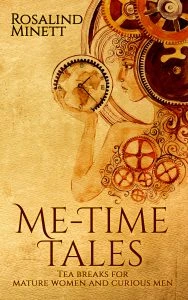
Here’s my new release, stories short and long, Me-Time Tales: tea breaks for mature women and curious men.

“A wonderful collection of amusing and pertinent short stories with expertly-crafted characters” Karen Perkins, bestselling author of ‘Thores-Cross’ and The Valkyrie Series

No, it’s certainly not erotica. There is a subtly dark edge to the stories most of which at first seem light-hearted. All kinds of women are unlocked in this second and much expanded edition, on Kindle only. Last few days at promotion price of 0.99. 

A top 100 Amazon reviewer said “. .  . their hallmark of wry humour reminds me of a female, modern-day Saki”

 I’ve ‘been’ each of these women, not for real, but during the moments of writing them, (not writing about them). I had some of these stories unused in my files and thought I’d add more, covering teenage to old age and various kinds of angst, to make a collection. I had to imagine being sixteen and covered with tattoos, someone well past sixty; a frustrated shopper experiencing a crisis, someone infertile, and someone overly fertile, someone abandoned, someone beautiful and someone certainly not.

My other fiction is serious, but if you look at my avatar you’ll see it has two sides. These stories probably represent my irreverent side very clearly. I did enjoy writing them!   images

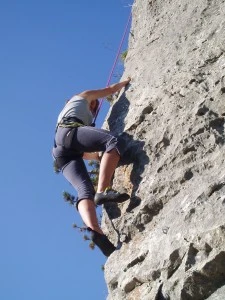
In the original edition, readers told me what they had enjoyed best.  Each reader had a different favourite. You might expect one story to be judged ‘best’, but no. Here are some. Inhibited Elfreda learns the beauty of a gorge. Harriet discovers a wonderful substitute for her man. A bizarre theft in the Well Woman clinic. Fish-phobic Daryl finds her sole.

 images                OLYMPUS DIGITAL CAMERA                 fishlot_opt                  pilemoney_opt

The reviewers do converge on the descriptor ‘quirky’ and that’s what Katie Fforde said: “Quirky and Intriguing”.

You’ll encounter obsessive women, curious men, an array of fish, a pile of hot money, a loving mattress, a mangy dog, a bra and a prosthesis. I hope each story will perk up your commute or dispel your night-time preoccupations, and send you to work or to sleep with an uneasy smile of recognition on your face.

If you buy in the next day or two, it will only cost you 0.99. Do enjoy, do write a review.

Continue Reading

Title Optional

Struggling to find the right title?

A writer recently remarked that she had difficulty in thinking of titles. I thought I’d concoct a list for beginner writers allowing use for different genres. Let me know if you like this kind of post. It can be taken seriously or not. Who knows, one of these may spark the next novel for someone. These titles are intended for you to make your own associations (and stories). I had fun.


One day too long

Caught in Time

Idyll in Back Alley

Plenary Session

Forbidden Journey

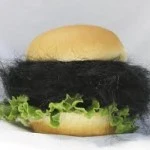
Is There Hair on my Burger?  (or their hair – works as well)

fur burger

An Intricate Endeavour

It Takes Time to Jam

Black is the New Grey

They never called me Edna

Not Everyone Marries in a Cathedral

Blogging To Bliss

Entropy


IF YOU LIKE THIS, I CAN DO MORE. (But I should be finishing my next chapter).

Continue Reading

9 points on writing edgy stories

IMG_1622

My second post on writing edgy short stories.

Here are some suggestions. (My previous post will add meaning to this.)

1. Write with a clear voice. Not yours, your character’s. It doesn’t have to be first person. You can write third person from the main character’s (MC) point of view. What matters is that point of view, the reader feeling sure s/he is standing in the MC’s shoes.

2.  The reader doesn’t have to like the MC. It is edgier if a sneaky liking for a character makes the reader uneasy or worse. (What sort of person must I be if I feel sympathy for this baddie I’m reading about?)

3. Short stories can’t cope with having too many characters. The edginess may depend on being in the MC’s head most of the read, so the reader has to be drawn to him/her in some way – even horror or outrage can achieve this.

images-2


4. Dialogue has to do its job well and pithily. Every word counts; every unnecessary word detracts. A character merely saying ‘Whatever‘ can give a total feel of his/her reaction, whereas a whole sentence may not.

5.  Structure. If you are working on : 1/5 start, 3/5 middle. 1/5 end, that final fifth must hit home. Either shock the reader by reversing all his/her expectations or let your MC cross over some unacceptable line. It may ‘only’ mean stealing a child’s bike and pretending innocence. However, the ‘journey’ must be there, and it’s vital that whatever happened is some kind of shock to the system.

6.  Edginess doesn’t necessarily require extreme sexual or aggressive behaviour. Risk of some form is usually involved but an action close to home can cause the uneasiest feelings, or an everyday event suddenly appearing to have a different significance.

7.  The edgy story does not have to be crime or erotica. It can suggest something subtly sinister. It can be socially provocative. It can be funny.  It’s no longer edgy for sexual abuse to be involved, not because it’s any more acceptable, but because it’s now hackneyed as a character device.

8.   It is still edgy to nudge into those actions that would be too awkward to admit to a friend. e.g. a friendship established in the first 4/5th of the tale where we worry that this friend is about to cheat or betray. The last fifth reveals that we are wrong. The kickback is that the assumptions we made highlight our own prejudices.  Edginess must produce unease.

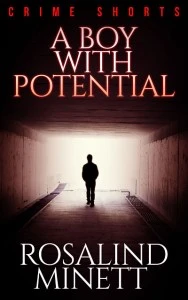
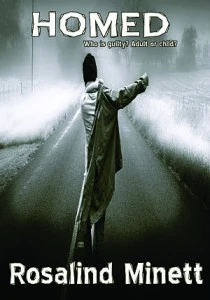
I hope I’ve achieved this in the first two of my Crime Shorts, A Boy with Potential and Homed. Do let me know if I have.

A_Boy_with_Potential_3_opt-2 Homed_book_cover_opt


Continue Reading

Writing edgy short stories (1)

Book_Worms_by_Wallwatcher_opt.pngYour style will never be suited to women’s magazines?

Is it that your story doesn’t have that happy an ending, or it isn’t uplifting?  Perhaps it isn’t quite PC. Maybe the apparent message isn’t truly what you mean AND you don’t want the reader to believe it’s what you mean. You may have your tongue in your cheek. You may have a cheek. Or you may have an unreliable narrator. The thing is, you want to write the story and you want it read. Going against the grain means taking a risk. Risks are edgy.

It’s a shame that ‘edgy’ can now refer to a hairstyle with long straight bits covering one eye, or the inclusion of full sex in YA. In fact it’s an adjective referring to a feeling of unease, a risk-taking. This could be social, intellectual, artistic.

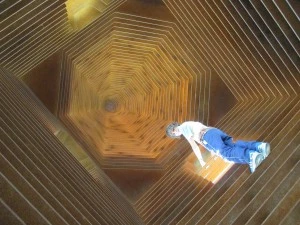
Let me suggest alternative imaginings of ‘edginess’ to those of hairstyles or urban sex.  Here are some images that may prompt a writing response in you: I’m deliberately not putting my own spin on them.

STACKED EDGES:

2012-03-25 01.03.39                  roofedges          bootswEdges


Or even more abstract: LAYERS OF MEANING

image


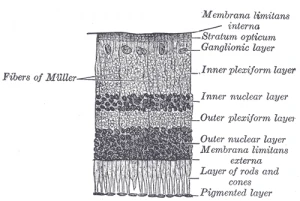
analysis of layers                 excavationlayer


The following one, though, is more obvious. Suppose it was sent as a greetings card? Wouldn’t you have a sense of unease about the sender. The inevitable Will he fall? reaction does not sit well with any good wishes expressed on the card.

coastal fishing

Finally, an anecdote. I don’t know the artist’s intention, but a portrait in the National Portrait Gallery’s exhibition a few years ago left me with a memorable feeling of distinct unease. It showed a beautifully dressed child of about eight years with an expression suited to a disenchanted thirty-year-old. No descriptions or explanations under these portraits, the artist may invite you to make up your own story . . .

Continue Reading

Writing a suitable home

Settling in at home – again?

father-holding-hand

Who is to decide what ‘home’ is ‘suitable’? How does it feel to the one ‘homed’? In HOMED, the second in my Crime Shorts series, a boy is being ‘helped’ to settle to a conventional home life. Something is wrong, but it isn’t easy to work out. Is a crime imminent, or has one already happened?

One of the issues I had in mind when I wrote this was the Australian disgust in the 50s and 60s when they built standard homes for aborigines and then found that understanding and use of sanitation and housekeeping did not come automatically with the facilities provided. The sentiment was ‘it’s not worth giving them anything civilized.’ The realization that those homes were impossibly wrong for the Aborigine essential life-style and culture.

HANDWBIRD

Similarly, what may seem to be a ‘nice’ solution for an individual in need may ignore aspects that are essential to him/her. As a psychologist, I often saw people before and after being homed, often for reasons thought entirely separate from the homing experience.

We have to be inside the head of our characters when writing fiction. It’s an exercise to see a situation from inside, or from a point of view not too visible.

There are crimes motivated by negative emotions: jealousy, anger, need to control/overpower. There are also crimes perpetrated by ignorance. The crimes we may feel most are those that penetrate our individuality. Blind kindness, adherence to established process, bureaucracy – these can lead to damage also.

Read this story and decide where the crime lies.

Homed_book_cover

Homed. (Crime Shorts Book 2)

http://www.amazon.co.uk/dp/B00VAVQ1DS

Continue Reading

A Talent for Short Stories

croc

GOODBYE CROCODILE  –  Conor Patrick

  published by The London Magazine

The London Magazine has a long-standing reputation for selecting and presenting work of a high literary quality, poetry and prose. They produced this collection of short stories in 2013. It does them credit as well as its author. I reviewed it then, but recently saw that it had not received a great deal of attention, so I flag it up again.

I always enjoy Irish writing.  What is it about Ireland – the oral tradition? – that it produces writers who so understand pain. People suffer elsewhere, after all.  Yet Irish writers are so skilled in capturing the image that strikes at the heart.

Conor Patrick is one of these. His writing displays both the velvet of his Irish genes and the sharpness of his past American environment. In this collection, he gives twelve stories that grasp that time of change or realisation and exposes it. Many of his characters are on the verge of adulthood and perhaps that is why they are lightly drawn. They are fawns not stags, often coping with raw or threatening circumstances. The settings show a wide variety of rough and ready America with characters who are struggling to survive physically or psychologically.

These are literary pieces, rich in description. The boy in the cathedral absorbs the effigies and images ‘lifting heavenwards their stained glass faces.’ In my favourite story, ‘Be Still the River’, perhaps the most beautifully written, there is an image of the ‘carapace’ of a pram. This image poignantly highlights the death of the mother and of a bereaved younger sister’s childhood. The girl does not have the large fish she had worked so hard to land only this remainder of a pram. She is used to pulling fish from the water as the one means of sustenance.

Patrick masters that task of suggesting half a world in the one paragraph – sign of the excellent short story writer. I highly recommended this collection to the serious reader.

Continue Reading

Bulgarian fiction

Bulgariaborder

In Bulgaria, the short story is not a lesser literary form as it is in the UK. Quite the reverse, it is highly valued. There are some fine Bulgarian writers of short stories and this post concerns just one.

Miroslav Penkov‘s short story collection, East of the West, is the most powerful of reads. We are taken into the heart and bowels of Bulgaria through the voices and situations of the various characters. This is very fine writing, and not just the name story. That won the BBC short story award of 2012 (by unanimous vote of the judges).

The story is full of symbolism. A village is divided by river and that river is used as a boundary between west and east at the end of World War II.  There is jealousy caused between the villagers because those on the west bank have access to western materialism. The eastern bank villagers long for jeans and Nike trainers, however worn-out.

The villagers are allowed to meet once a year, but they try to keep contact other times by shouting across at its narrowest point, or, in the case of young lovers, by swimming to the centre and risking shots from the armed guards. The villagers once tried to maintain their identity by diverting the river so that it kept the village undivided. The result was a flooding, the church being completely drowned. The protagonist is encouraged by his loving, but aggressive cousin, to meet her at the submerged cross of this church.

His sister makes a similar swim to meet her fiancé, to show the ‘diamonds’ for her wedding the next day. Both are shot by guards. They are dressed in their finest, dead, for two funerals, each on its own  bank of the river.

Somehow, in the face of his own love and career disappointments, the protagonist must move on, a metaphor for Bulgaria.

EastpfWest


It seems opportune, at the very time that the number of Bulgarian immigrants (amongst others) is being agonised over, that the harsh lifestyle Bulgarians suffer is brought to the consciousness of other nations. It may be that it takes someone raised in the culture, but career-boosted outside of it, to write about Bulgaria with that telescope of understanding.

Penkov studied so hard that his English was excellent by the time he reached the US to further his studies. Therefore, his stories have the advantage of being written in English, not translated. Each of these stories is entirely absorbing and thought-provoking. The choice of words often holds a significance that points to larger issues. It was sobering to find that several stories were written when the author was very young. No-one, we would think in the West, should have inside knowledge or direct experience of such dark matters: the hanging of dissidents, the enforced changing of names, the lack of medical aid to severely ill people, the poverty and hunger, the lack of corporate compassion for the young or needy.

Penkov manages to get within the head of young and old Bulgarians, male and female. Filtered through the narrative is the history of a once-strong country beleaguered by political discord and powerful nations. The consequent poverty and desperation that cause alienation and anarchism come through these stories in a way that is fresh and bleeding.

The stories are both warm and dark, some so dark that it is difficult to read on. Why turn to fantasy and horror when more real events are offered here?  For instance, the dead (accidentally killed?) child being lifted into position for a family photograph. Or the almost dead vagrant on the church plinth being readied, or is it desecrated, for eternity? An adolescent with his sidekick, running loose, alienated, anarchic and yet retaining some humanity, ends up in the church tower pissing down on his compatriots who are literally jumping to political command – a darkly humorous message.

The tragic and emotionally neglected young girl, her head shaved so that she can be like her dead brother, is trained to make bagpipes, their soft section the nearest to a comforting breast her world provides.  When her father is arrested, she is left to care for her terminally ill mother and ultimately is left alone with her bagpipe. The reader can almost hear its plaintive sound.

A young man goes against home politics by being in America, wars with his grandfather who is eventually proved to be in the more enviable (Bulgarian) position. The Bulgarian desire to receive good education, career opportunity, a decent lifestyle, conflicts with all those values and close family ties that make life worthwhile.

The yan that drives and threatens to destroy the individual has a meaning beyond mere envy. It almost has a personality of its own, defining the Bulgarian and almost, his culture.

Rijpe_mispels

Like the medlars prevalent in the countryside of Bulgaria, these tales are bitter but necessary to assuage (literary) hunger. We can understand why Bulgarians, despite loving their country, need to emigrate to gain the basic necessities of life.

I feel the richer for reading these stories, and their content will stay with me.Penkov is due to publish a novel shortly. It is something to look forward to.
Continue Reading

Chinese short stories

Shi Cheng -Short Stories from Urban China– edited by Liu Ding, Yinghua Lu and Ra Page

It was purely coincidental that just as I finished reading the last story in this collection, the government announced a relaxation of visa restrictions to Chinese nationals with the rejoinder that British attitudes towards the Chinese might be altered. Notwithstanding the human rights issues, I had never expected that those would characterize the national psyche. I have never visited China so had little knowledge. What struck me in reading these several stories was a sense of familiarity with the humour and irony of the authors.

Image

This collection gives a rare flavour of China. However, the Introduction is just as important. The story of the circumstances in which the collection came about is fascinating and itself gives some insight into Chinese life. As the Introduction explained, each author in this collection is already highly rated in China if unknown in the UK. Each story comes from a different city in China, with its own climate and atmosphere. The characters range from those on the far fringe of respectability to those who have enjoyed an excellent education.

To do the book justice, each story really deserves to be reviewed individually, but I have compromised with my favourites.

Wittily, Jie Chen writes about a girl `rushing’ to prevent a murder. Her sense of urgency is constantly hampered by her make-up, double-checking of door locks, street sales of passport/ diary/dagger while simultaneously she mentally constructs scenarios for her friend’s crisis. It is a very amusing ‘literary chick-lit’ in which we learn something of the inconveniences and hazards in Chengdu. Josh Sternberg needs congratulating for his translation: he captures ditziness in an way immediately recognizable in the UK.

He does an equally good job on Zhang Zhihua’s story, a clever association between the agonizing wisdom tooth which should be removed and the state of the owner’s marriage. Sternberg manages to make clear the play on a Chinese word which means either `childish’ or `wisdom’ without spoiling the narrative style of the tale.

Hang Dong’s beautifully written story, `This Moron is Dead’ is the ultimate in bleak irony, social comment and literary style. I loved his use of cherry blossom as a symbol on several levels. It only exists on one street in the city; it only blossoms very briefly – a reference to past Japanese intrusion?

The Chinese sense of humour is best shown by Diaou Dou’s `Squatting’, which had me laughing out loud – inappropriately, as I was in the dentist’s waiting room. The earnest educated group aims to benefit their community by polite approaches to those in power. The description of their efforts and the authoritarian outcomes, although hilarious, gives a flavour of everyday life and difficulties in Shenyang. Perhaps all our wars could be solved by the use of ridicule. Diaou Dou’s writing reminded me of Jonathan Swift.

In Xu Zechen’s `Wheels are Round’, the poverty and life-style of labourers on the fringe of Beijing is told with a hilarity just short of bitterness. The mechanics look towards the, for them, unattainable city where largesse falls from the sky and fortunes lie awaiting to be picked up from the pavement. With months of ingenuity the main character pieces together a car, the zenith of his ambition, using scrap from the garage where he works and is consistently defrauded. The car’s fortune is shown with the irony that characterizes these writers.

Altogether, it was the irony and irrepressible humour that gave me such a warm feeling of kindred spirit.

Most readers will surely enjoy these urban tales by masterful Chinese writers as much as I did. There aren’t enough short story collections on the bookshelves of libraries and bookshops. Comma Press is benefiting the reading public by seeking to remedy this situation.

The paperback is available from Amazon, or better still, from your local independent bookseller. I bought it from Mr B’s Emporium in Bath:

  • Publisher: +Comma Press (30 April 2012)
  • Language: English
  • ISBN-10: 190558346X
  • ISBN-13: 978-1905583461
Continue Reading