Strengthening your writing via stimuli.

roseSmell_opt

Writing stimuli. What gave you that sudden idea that made you urgently scribble it down? It’s worth exploring.

The power of olfactory stimuli in activating memory is well known. But it’s much harder to ‘dream up’ a smell that might affect the character in your story, than it is a sound or sight.

When we’re stuck for ideas for a visual stimulus,  Art can provide perspectives, narratives, symbols to enrich our writing.  For auditory stimuli, theatre and radio present us with ideas and emotions through sound patterns, speech or music.  snuff_optThere is no equivalent for smells.

So having found the right sound or sight stimuli to cause your hero to pale with emotion how to find the right smell/scent/perfume/stink to cause emotional impact? Leave aside the obvious triggers: magnolia, blood, excrement, cabbage (who wants to write hackneyed stuff?). Will the character stop short as spinach fumes enter his/her nostrils, or candy floss?  What particular scent might have been recorded in his/her long term memory?

skunk_opt

You can prepare for that blank moment. How about noting down your own strong reactions to any smell, pleasant or unpleasant? List the source for each. This will make you rack your brains, and may well summon up incidents that you can use in your story. Add any smells that you already know act as powerful reminders for you – and write down why.

A scent for one person may be a stink for another. One perfume might raise very different memories for two different characters. Identifying that memory can enrich your story line. For instance, the whiff of musty clothes in a charity shop reminds Kara of a great aunt, but Debra of pass-me-downs when she was young.  The scent of aloe vera takes Anna back to the birth of her baby, but reminds Dan of a little lane in Almeria where he was set on by teenage thugs. They find themselves quarrelling . . .

TapirAtSDZ

With such a list of smells, you can google them to add any interesting facts to their source and the memories they evoke for you.  Strengthen your writing with that detail that enthralls readers and brings them right into your story.

Continue Reading

Title Optional

Struggling to find the right title?

A writer recently remarked that she had difficulty in thinking of titles. I thought I’d concoct a list for beginner writers allowing use for different genres. Let me know if you like this kind of post. It can be taken seriously or not. Who knows, one of these may spark the next novel for someone. These titles are intended for you to make your own associations (and stories). I had fun.


One day too long

Caught in Time

Idyll in Back Alley

Plenary Session

Forbidden Journey

Is There Hair on my Burger?  (or their hair – works as well)

fur burger

An Intricate Endeavour

It Takes Time to Jam

Black is the New Grey

They never called me Edna

Not Everyone Marries in a Cathedral

Blogging To Bliss

Entropy


IF YOU LIKE THIS, I CAN DO MORE. (But I should be finishing my next chapter).

Continue Reading

Winning Writing

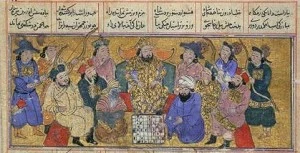
Persianmss14thCambassadorfromIndiabroughtchesstoPersianCourt

This lovely image is Iranian.

I like playing Scrabble, but I’m not competitive. The challenge presented by the board in hand and the variety of options, limitations placed upon moves is sufficient. Sometimes the layout feels like an art form. It’s fun to enliven the game further by restraints such as allowing only nouns related to e.g. writing, for words of 4 letters or more. Going to an event based on competition would spoil the enjoyment completely.

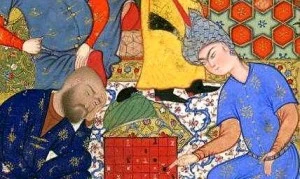
It seems that the lack of competitiveness has a worthy origin.Chess_Players_of_Haft_Awrang

Chess is thought to originate in India, before the 6th century AD and then spread to Persia, pictured here.

Chess reached Southern Europe via Arabs and Muslims, and by the 15th century it had evolved into its current form.

The “Romantic Era of Chess” was characterized by swashbuckling attacks, clever combinations, brash piece sacrifices and dynamic games. Winning was secondary to winning with style and the focus was upon artistic expression. I’d loved to have been an audience then before the style changed, in the 19th century, to one of technical mastery and long-term planning.

In presenting our fiction to the world we writers are exhorted to use multiple techniques to gain sales.  Innocent days of creating the best that our talent and art form allow, end. Months of miserable media-bashing follow. What contrasting activities, what different emotions!

Reading about the origin of chess brings similarly opposite emotions to reading self-help books that teach tricks of beating algorithms or garnering a following. It’s these books themselves that sell in huge numbers, their authors then ‘teaching’ a system to all other writers on the basis of this ‘sure’ success.

How sad.  William Boyd, Anne Tyler, Kasuo Ishiguro novels, say, may have comparable Amazon sales rankings with a very badly produced book on Twitter techniques. Even the most reputable newspapers may show best-selling books for their Top Twenty rather than a list of most highly regarded fiction.

Swashbuckling attacks on the media, clever combinations of layered promotion, technical mastewinningry of marketing ploys and long-term planning of a marketing campaign is what sells books and makes a winning writer. Thank goodness that reputable writing competitions rely on writing judges, not the amount of ‘votes’ an entrant can grab via social media. Nowadays, all of us writers are pushed into this.

I wonder whether a ‘romantic era’ for art forms will ever return.

Continue Reading

Writing edgy short stories (1)

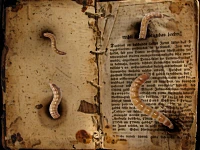
Book_Worms_by_Wallwatcher_opt.pngYour style will never be suited to women’s magazines?

Is it that your story doesn’t have that happy an ending, or it isn’t uplifting?  Perhaps it isn’t quite PC. Maybe the apparent message isn’t truly what you mean AND you don’t want the reader to believe it’s what you mean. You may have your tongue in your cheek. You may have a cheek. Or you may have an unreliable narrator. The thing is, you want to write the story and you want it read. Going against the grain means taking a risk. Risks are edgy.

It’s a shame that ‘edgy’ can now refer to a hairstyle with long straight bits covering one eye, or the inclusion of full sex in YA. In fact it’s an adjective referring to a feeling of unease, a risk-taking. This could be social, intellectual, artistic.

Let me suggest alternative imaginings of ‘edginess’ to those of hairstyles or urban sex.  Here are some images that may prompt a writing response in you: I’m deliberately not putting my own spin on them.

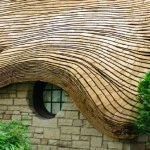
STACKED EDGES:

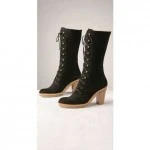
2012-03-25 01.03.39                  roofedges          bootswEdges


Or even more abstract: LAYERS OF MEANING

image


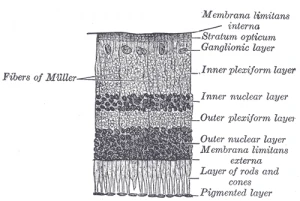
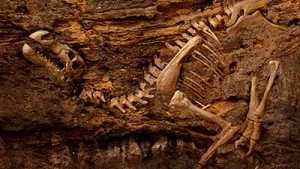
analysis of layers                 excavationlayer


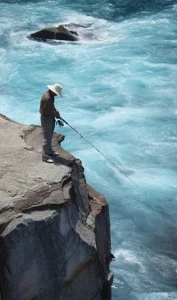
The following one, though, is more obvious. Suppose it was sent as a greetings card? Wouldn’t you have a sense of unease about the sender. The inevitable Will he fall? reaction does not sit well with any good wishes expressed on the card.

coastal fishing

Finally, an anecdote. I don’t know the artist’s intention, but a portrait in the National Portrait Gallery’s exhibition a few years ago left me with a memorable feeling of distinct unease. It showed a beautifully dressed child of about eight years with an expression suited to a disenchanted thirty-year-old. No descriptions or explanations under these portraits, the artist may invite you to make up your own story . . .

Continue Reading

ARABIA – Walter de la Mare

ARABIA.

What is left to say?

images


This was the first poem I loved, and it’s still my favourite. Here the country is the character, and like all well-drawn characters it is complex and has its dark side.


Far are the shades of Arabia,
Where the Princes ride at noon,
‘Mid the verdurous vales and thickets,
Under the ghost of the moon;
And so dark is that vaulted purple
Flowers in the forest rise
And toss into blossom ‘gainst the phantom stars
Pale in the noonday skies.

Sweet is the music of Arabia
In my heart, when out of dreams
I still in the thin clear mirk of dawn
Descry her gliding streams;
Hear her strange lutes on the green banks
Ring loud with the grief and delight
Of the dim-silked, dark-haired Musicians
In the brooding silence of night.

They haunt me — her lutes and her forests;
No beauty on earth I see
But shadowed with that dream recalls
Her loveliness to me:
Still eyes look coldly upon me,
Cold voices whisper and say —
‘He is crazed with the spell of far Arabia,
They have stolen his wits away.’

ARABIA – Walter de la Mare


Continue Reading

Bulgarian fiction

Bulgariaborder

In Bulgaria, the short story is not a lesser literary form as it is in the UK. Quite the reverse, it is highly valued. There are some fine Bulgarian writers of short stories and this post concerns just one.

Miroslav Penkov‘s short story collection, East of the West, is the most powerful of reads. We are taken into the heart and bowels of Bulgaria through the voices and situations of the various characters. This is very fine writing, and not just the name story. That won the BBC short story award of 2012 (by unanimous vote of the judges).

The story is full of symbolism. A village is divided by river and that river is used as a boundary between west and east at the end of World War II.  There is jealousy caused between the villagers because those on the west bank have access to western materialism. The eastern bank villagers long for jeans and Nike trainers, however worn-out.

The villagers are allowed to meet once a year, but they try to keep contact other times by shouting across at its narrowest point, or, in the case of young lovers, by swimming to the centre and risking shots from the armed guards. The villagers once tried to maintain their identity by diverting the river so that it kept the village undivided. The result was a flooding, the church being completely drowned. The protagonist is encouraged by his loving, but aggressive cousin, to meet her at the submerged cross of this church.

His sister makes a similar swim to meet her fiancé, to show the ‘diamonds’ for her wedding the next day. Both are shot by guards. They are dressed in their finest, dead, for two funerals, each on its own  bank of the river.

Somehow, in the face of his own love and career disappointments, the protagonist must move on, a metaphor for Bulgaria.

EastpfWest


It seems opportune, at the very time that the number of Bulgarian immigrants (amongst others) is being agonised over, that the harsh lifestyle Bulgarians suffer is brought to the consciousness of other nations. It may be that it takes someone raised in the culture, but career-boosted outside of it, to write about Bulgaria with that telescope of understanding.

Penkov studied so hard that his English was excellent by the time he reached the US to further his studies. Therefore, his stories have the advantage of being written in English, not translated. Each of these stories is entirely absorbing and thought-provoking. The choice of words often holds a significance that points to larger issues. It was sobering to find that several stories were written when the author was very young. No-one, we would think in the West, should have inside knowledge or direct experience of such dark matters: the hanging of dissidents, the enforced changing of names, the lack of medical aid to severely ill people, the poverty and hunger, the lack of corporate compassion for the young or needy.

Penkov manages to get within the head of young and old Bulgarians, male and female. Filtered through the narrative is the history of a once-strong country beleaguered by political discord and powerful nations. The consequent poverty and desperation that cause alienation and anarchism come through these stories in a way that is fresh and bleeding.

The stories are both warm and dark, some so dark that it is difficult to read on. Why turn to fantasy and horror when more real events are offered here?  For instance, the dead (accidentally killed?) child being lifted into position for a family photograph. Or the almost dead vagrant on the church plinth being readied, or is it desecrated, for eternity? An adolescent with his sidekick, running loose, alienated, anarchic and yet retaining some humanity, ends up in the church tower pissing down on his compatriots who are literally jumping to political command – a darkly humorous message.

The tragic and emotionally neglected young girl, her head shaved so that she can be like her dead brother, is trained to make bagpipes, their soft section the nearest to a comforting breast her world provides.  When her father is arrested, she is left to care for her terminally ill mother and ultimately is left alone with her bagpipe. The reader can almost hear its plaintive sound.

A young man goes against home politics by being in America, wars with his grandfather who is eventually proved to be in the more enviable (Bulgarian) position. The Bulgarian desire to receive good education, career opportunity, a decent lifestyle, conflicts with all those values and close family ties that make life worthwhile.

The yan that drives and threatens to destroy the individual has a meaning beyond mere envy. It almost has a personality of its own, defining the Bulgarian and almost, his culture.

Rijpe_mispels

Like the medlars prevalent in the countryside of Bulgaria, these tales are bitter but necessary to assuage (literary) hunger. We can understand why Bulgarians, despite loving their country, need to emigrate to gain the basic necessities of life.

I feel the richer for reading these stories, and their content will stay with me.Penkov is due to publish a novel shortly. It is something to look forward to.

Continue Reading